History of HSRA (Hindustan Socialist Republican Association)
The Hindustan Socialist Republican Association (HSRA) was a revolutionary organization in India formed with the aim of ending British colonial rule through armed struggle and establishing a socialist republic. It emerged from earlier revolutionary groups and played a crucial role in India’s independence movement during the 1920s and 1930s.
Origins and Formation
HSRA traces its roots to the Hindustan Republican Association (HRA), which was founded in 1924 in Kanpur by revolutionaries like Ram Prasad Bismil, Ashfaqulla Khan, Chandrashekhar Azad, and Sachindra Nath Sanyal. The HRA aimed to overthrow British rule through armed revolution and establish a federal republic.
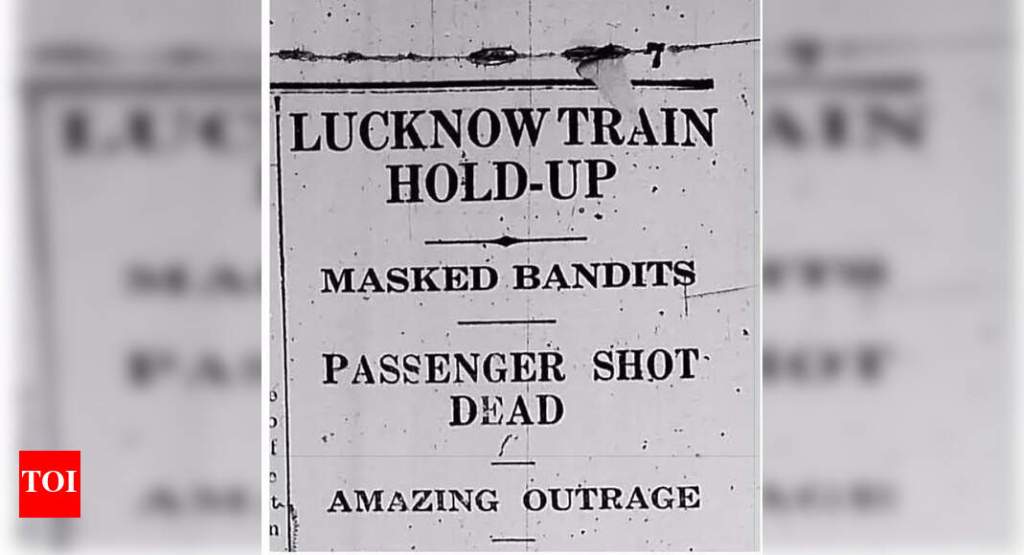
After the death of many HRA leaders in the Kakori conspiracy case (1925), the surviving members regrouped and redefined their goals. The organization was restructured in 1928 in Delhi and renamed the Hindustan Socialist Republican Association, marking a clear ideological shift towards socialism under the influence of Bhagat Singh and others.
Ideology and Objectives
The HSRA aimed to:
Overthrow British imperialism through armed struggle.
Establish a socialist republic based on equality and justice.
Educate the masses about the exploitative nature of colonial rule and capitalism.
It combined Marxist ideology with Indian nationalism, emphasizing both economic justice and freedom from colonial oppression.
Key Activities
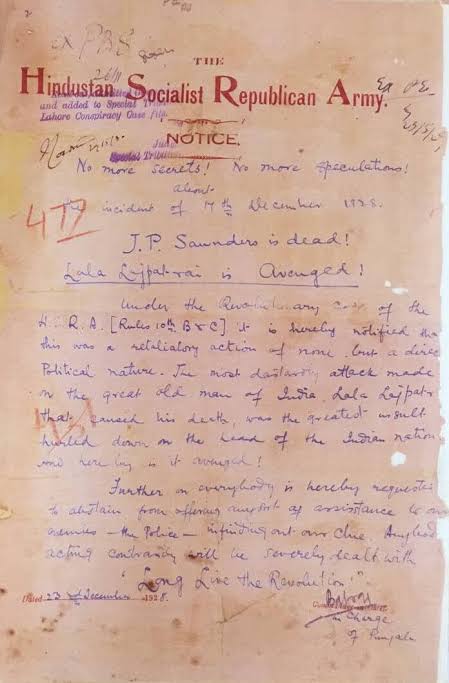
Saunders Assassination (1928): To avenge the death of Lala Lajpat Rai, HSRA members Bhagat Singh, Rajguru, and Sukhdev assassinated British police officer J.P. Saunders in Lahore.
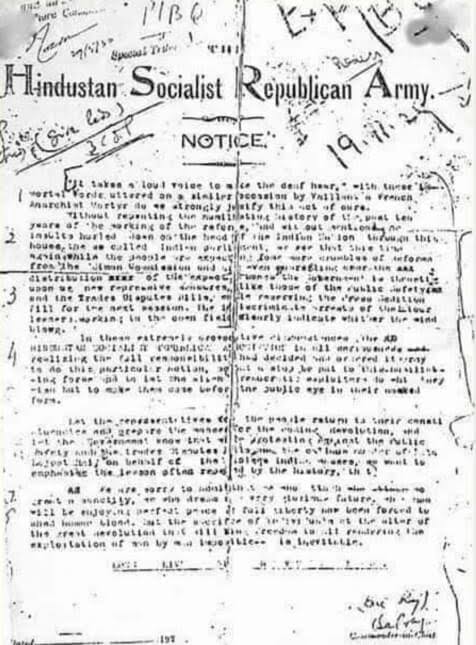
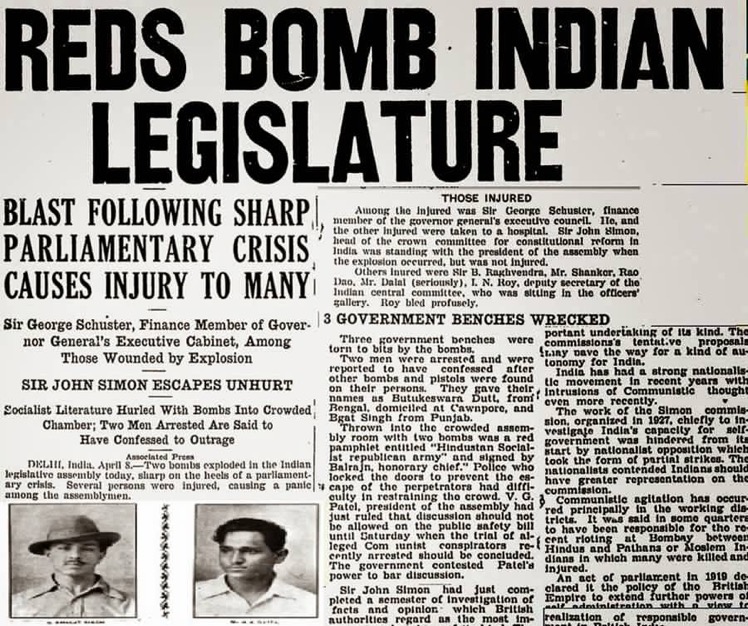
Central Legislative Assembly Bombing (1929): Bhagat Singh and Batukeshwar Dutt threw non-lethal bombs in the Central Assembly to protest repressive laws and promote their cause, surrendering afterward to spread their message through the trial.
Publication of Manifestos: HSRA circulated revolutionary pamphlets and literature, including “The Philosophy of the Bomb”, to justify their actions and promote their ideology.
Decline and Legacy
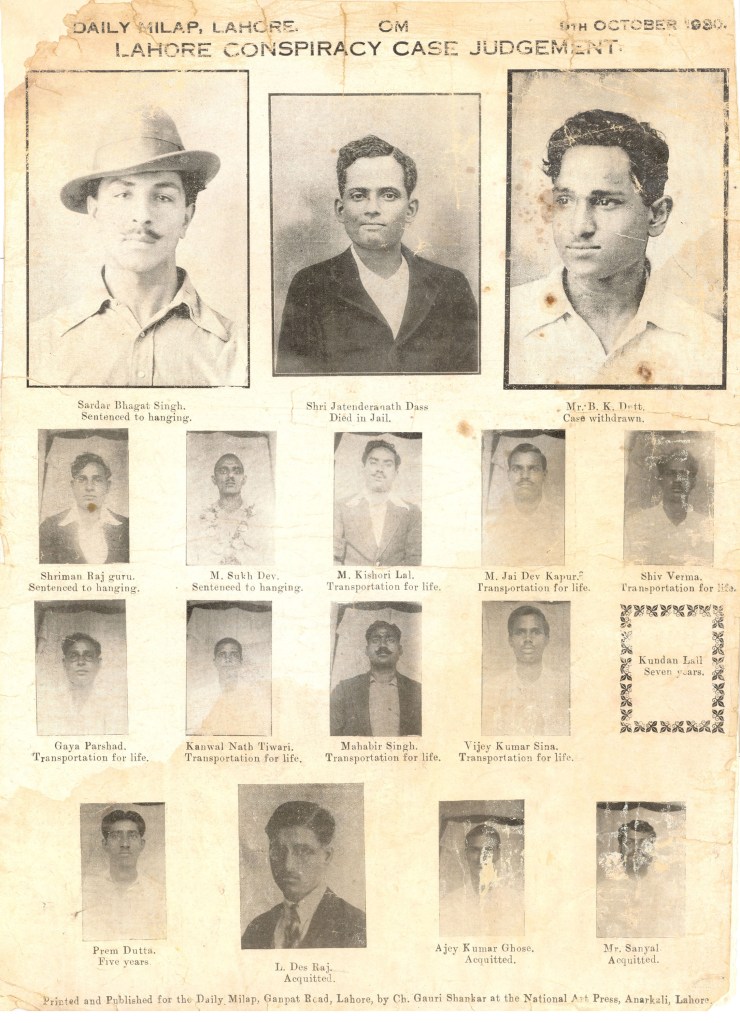
The arrest and execution of Bhagat Singh, Rajguru, and Sukhdev in 1931 dealt a major blow to the organization. Other leaders like Chandrashekhar Azad continued underground activities until Azad’s death in 1931 in a police encounter at Allahabad.
By the early 1930s, HSRA had largely disbanded due to intense British suppression, lack of resources, and internal divisions. However, their actions and martyrdom had a profound impact on Indian youth and inspired future generations.
Legacy
The HSRA remains a symbol of revolutionary patriotism, self-sacrifice, and ideological clarity. It shifted the tone of the freedom struggle by challenging the notion that non-violence was the only path to independence, and highlighted the importance of social and economic justice alongside political freedom.
Their slogan “Inquilab Zindabad” (Long Live the Revolution) continues to be a rallying cry in political and social movements across India.